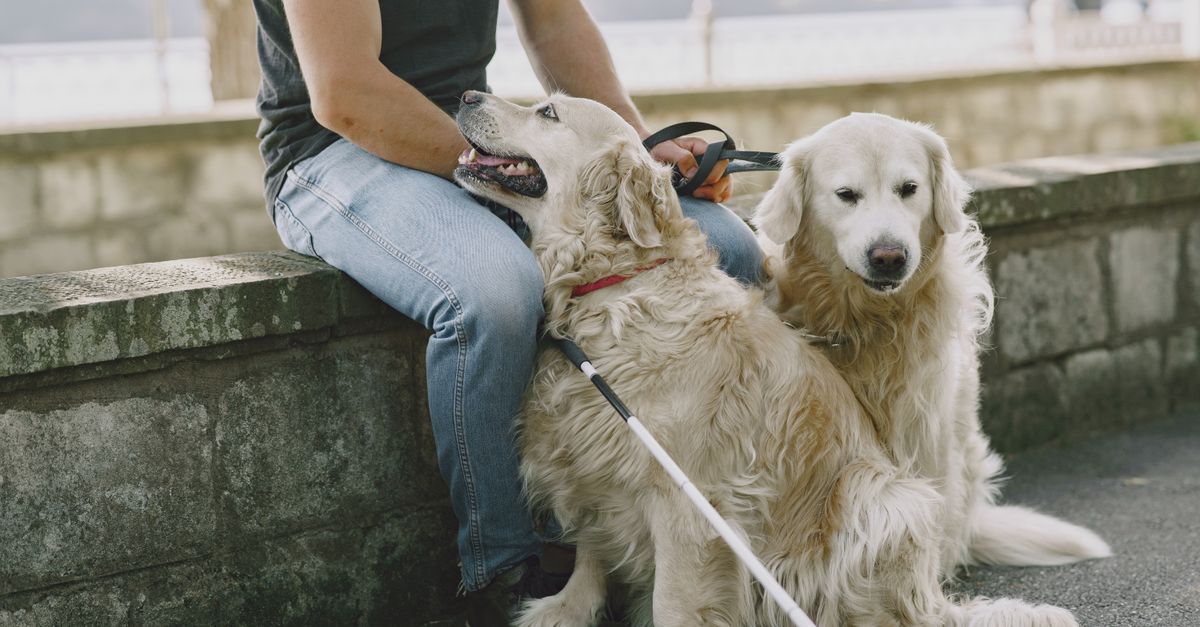
Bristol Airport accepts recognised guide dogs and assistance dogs, but international travel with one involves a formal process under the Pet Travel Scheme, not just a note on your booking. Tell your airline as early as possible, ideally at the time of booking and at least 48 hours before you travel, and know that there are no relief facilities for dogs once you are through security. Details checked 2026 against Bristol Airport's own published protocol.
Who counts as a recognised assistance dog
A guide dog, in UK terms, is trained, assessed and accredited by the Guide Dogs for the Blind Association; outside the UK, an equivalent accreditation from a body affiliated to the International Guide Dog Federation applies. An assistance dog more broadly is one trained and qualified by a member of Assistance Dogs (UK), which includes Dogs for the Disabled, Canine Partners, the Guide Dogs for the Blind Association, Hearing Dogs for Deaf People, and Support Dogs. These dogs carry formal identification and Department of Health certification. If your dog was trained outside the UK, it should meet the membership criteria of an equivalent recognised body, such as Assistance Dogs International or Assistance Dogs Europe, for Bristol Airport to treat it the same way.
This matters because the protocol below, drawn from Bristol Airport's own published guidance for recognised assistance dogs, applies specifically to dogs meeting these accreditation standards, not to emotional support animals or pets more generally, which are covered separately.
Domestic UK travel versus flying to a non-UK destination
The airport's formal Pet Travel Scheme protocol applies to journeys to and from non-UK destinations. Dogs travelling to or from the Republic of Ireland, the Channel Islands, the Isle of Man, or the Isles of Scilly are not subject to the same checks. If you are flying entirely within the UK with your assistance dog, the paperwork burden below is lighter; it is international travel, particularly outbound documentation and the return leg, where the process becomes formal and time-critical.
Paperwork and deadlines
Notify your airline of your intention to travel with a recognised assistance dog as early as possible, and no later than 48 hours before you fly. The airline passes your travel details to the airport's assistance contractor, OCS, which opens a record for your journey.
You are required to send the relevant paperwork to Bristol Airport's control centre by fax, at least 48 hours before departure or arrival. What is needed depends on the journey:
- A copy of the dog's pet passport, for standard Pet Travel Scheme routes; or
- For travel to or from a country outside that scheme: a third-country official veterinary certificate, a certificate of the microchipping date, a rabies vaccination certificate issued after microchipping, and a blood test for rabies antibodies carried out at least 6 calendar months before entry to the UK.
On the day you arrive back into the UK, you also need to provide evidence of tick treatment and tapeworm treatment for the dog. Missing any of this paperwork at the deadline is the main reason assistance dog travel gets delayed or refused, so treat the 48-hour window as a hard cutoff rather than a guideline.
What happens at check-in
Airline check-in staff will ask you to confirm you are the owner of the guide dog or assistance dog, then call OCS. An Animal Clearance Officer attends the check-in desk, checks the dog's microchip against your paperwork, and completes a pre-travel checklist before you proceed.
Relief areas: there is nothing airside
There are no facilities for a dog to relieve itself once you are through security and in the departure lounge. Before you head through, the Animal Clearance Officer can arrange for a member of staff to escort you and your dog to a relief area, and can also arrange assistance getting through to the departure lounge afterwards if you need it. Building this stop into your airport timing, rather than assuming you can sort it out airside, avoids an unnecessary rush.
Arriving back in the UK with an assistance dog
On arrival, an Animal Clearance Officer meets the flight and takes you and your dog to an animal holding point, where the dog and its documentation are checked for Pet Travel Scheme clearance. This includes the tick and tapeworm treatment evidence mentioned above. The officer completes an arrival checklist as part of this process, so allow a little extra time after landing before you can head to the exit compared with a standard arrival.
Getting to and from the airport with your dog
Pre-booked taxis and Bristol Airport's contracted operators can generally accommodate an assistance dog without issue, since this is a standard accessibility requirement rather than an unusual one, but it is worth mentioning it when you book so the driver knows what to expect. If you are also considering bringing a pet, rather than a recognised assistance dog, in a taxi to or from the airport, that is a separate question covered in our guide to pets in a Bristol Airport taxi. For broader mobility support at the terminal, see our guides to booking special assistance and wheelchair-accessible taxis.
FAQs
Do I need to tell Bristol Airport in advance about my assistance dog? Yes. Notify your airline at booking if possible, and no later than 48 hours before you travel, so the airport's assistance contractor can prepare your paperwork check.
What paperwork do I need for international travel with an assistance dog? A pet passport for standard Pet Travel Scheme routes, or for other countries a third-country veterinary certificate, microchip date certificate, rabies vaccination certificate and a rabies antibody blood test taken at least 6 months before UK entry. Tick and tapeworm treatment evidence is also required on return to the UK.
Is a domestic UK flight with an assistance dog simpler? Yes, broadly. The full Pet Travel Scheme documentation applies to non-UK travel; dogs travelling to or from Ireland, the Channel Islands, the Isle of Man and the Isles of Scilly are not subject to the same checks.
Can my assistance dog go to the toilet before I board? Not once you are airside. There are no relief facilities beyond security, so ask the Animal Clearance Officer to arrange access to a relief area and an escort back through before you head to the departure lounge.
What happens when I land back in the UK with my assistance dog? An Animal Clearance Officer meets your flight, takes you to an animal holding point, checks the dog and its paperwork against Pet Travel Scheme requirements, and completes an arrival checklist before you can leave.
Will a pre-booked taxi accept my assistance dog? Generally yes. It is a standard accessibility need for local operators, but mention it when you book so the driver and vehicle are prepared.
Bristol Airport Guide is an independent travel guide, not affiliated with Bristol Airport. For more on accessibility at the terminal, see our FAQs page, and for getting to and from the airport, see taxis and ride-hailing.