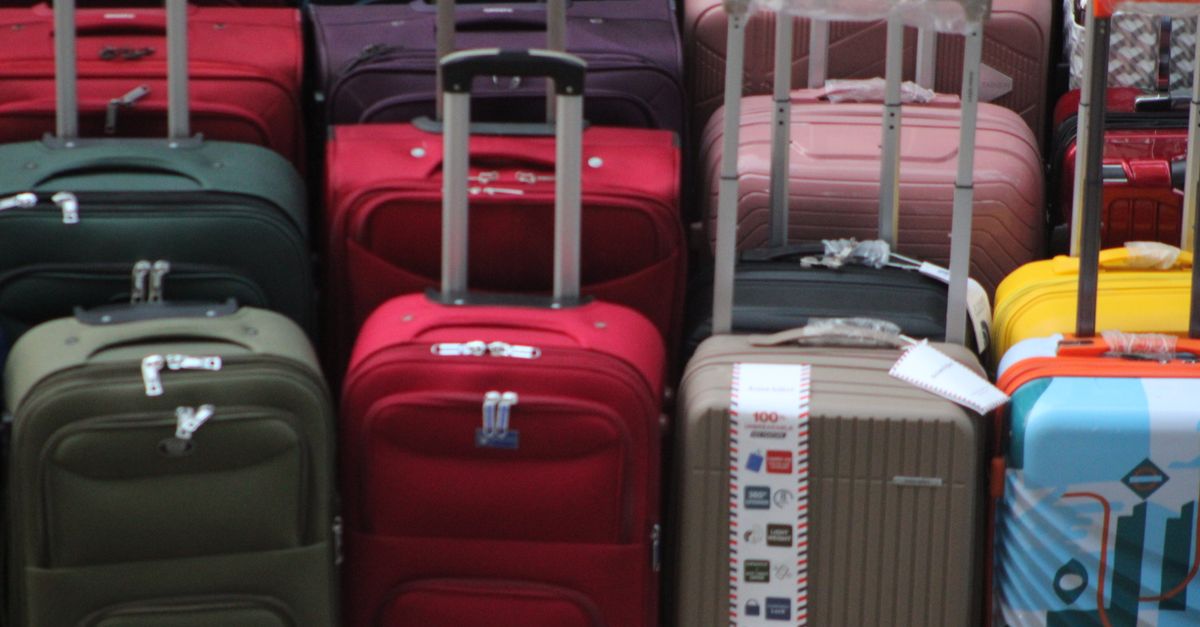
A standard saloon holds around two large suitcases, an estate car roughly three to four, a family-sized MPV (a six-seat people carrier such as a Ford Galaxy or VW Sharan-class vehicle) about four to five, and a seven-to-eight-seat minibus somewhere between six and eight — though that top figure drops fast once every seat is actually filled with a passenger. Passenger count and boot space don't scale together in the same vehicle, which is the single most useful thing to understand before booking a family transfer. This guide looks specifically at what estate cars, MPVs and minibuses each offer in practice, rather than at fares or which operator to pick.
The quick answer, by vehicle type
- Saloon: seats up to four, but the boot typically takes only around two large cases plus hand luggage. Fine for two adults, tight for a family.
- Estate: same four-seat capacity as a saloon, with a longer, taller boot that generally holds three to four large cases. A common middle-ground choice for a couple with children and modest luggage.
- MPV / people carrier (6 seats): the usual family default. With the third row folded down it can take a genuinely large amount of luggage; with all six seats in use for passengers, boot space shrinks to roughly four to five large cases, sometimes fewer once a buggy or hand luggage is added.
- Minibus (7 to 8 seats): the highest nominal capacity, roughly six to eight large cases, but this assumes not every seat is filled with a passenger. Fill all eight seats and the remaining boot space can be surprisingly limited.
These are general ranges seen across UK airport transfer and private hire fleets rather than fixed specifications, since boot volume varies between makes and model years within the same vehicle class. Confirm exact capacity with your operator when booking, particularly if your group is close to a limit.
Why headcount alone is the wrong way to size a vehicle
It's tempting to book by "how many of us are there," but luggage is what actually determines whether a car works. A saloon comfortably seats four adults, yet its boot won't take four full-size cases at once — two is the realistic limit. The same logic applies further up the range: an MPV nominally seats six, but if all six seats are filled with people, there's no folded third row freeing up load space. A minibus can look like the safe oversized option for a family, but an 8-seat minibus carrying 8 passengers and 8 cases is a genuinely different, larger vehicle than the same minibus carrying 4 people and their bags.
The rule most operators work to: book by suitcases, not by seats. Count your cases and hand luggage first, then match that to a vehicle class, rather than assuming "four of us" automatically means a saloon or that "six seats" automatically means enough boot room.
What eats into a vehicle's luggage space
- Child car seats and boosters take up a passenger position rather than boot space directly, but fewer people can then share a row, which often pushes a family from a saloon or estate up to an MPV even with modest luggage.
- Buggies and pushchairs. A folded single buggy is roughly equivalent to an extra medium case; a double or all-terrain buggy takes considerably more room and can be the deciding factor between an estate and an MPV.
- Golf bags, skis and other long or bulky items generally need the extra length of an estate, MPV or minibus rather than a saloon boot — worth flagging when you book.
- A full complement of passengers. The more seats used for people, the less structural boot space is left behind them, especially in a minibus or an MPV's third row.
This is the same logic operators apply generally when quoting a vehicle class — see the fuller breakdown of standard classes and what each typically holds in the luggage and vehicle sizes guide.
Estate, MPV or minibus: which fits a family
Estate cars suit two adults and one or two children with a moderate amount of luggage — a case each plus hand luggage, without a buggy or bulky extras. A step up from a saloon without the fare of an MPV.
MPVs are the usual choice once a buggy, car seats or a full week's luggage for a family of four are involved. Because the third row folds flat, they offer meaningfully more usable space than their six-seat badge suggests, provided not all six seats are needed for passengers.
Minibuses make sense for two families travelling together, a larger family group, or trips involving bulky kit like ski or golf equipment. They suit journeys where both passenger count and luggage volume are high at once — a single minibus is usually simpler than splitting a large family across two smaller cars.
Booking the right size for your family
- Count suitcases and hand luggage before you book, not just passengers.
- Mention any buggy, car seat, wheelchair, or bulky item when booking, since this can change the recommended vehicle class.
- If your group is close to a stated limit, ask the operator to confirm the actual boot capacity for the specific vehicle they'll send, since this varies by make and model even within one class.
- For journeys to or from Bristol Airport, current vehicle classes are covered on the taxis page, and travelling with young children specifically — including car seats — is covered in the family transfers guide. General questions about getting to and from the airport are covered in the FAQs.