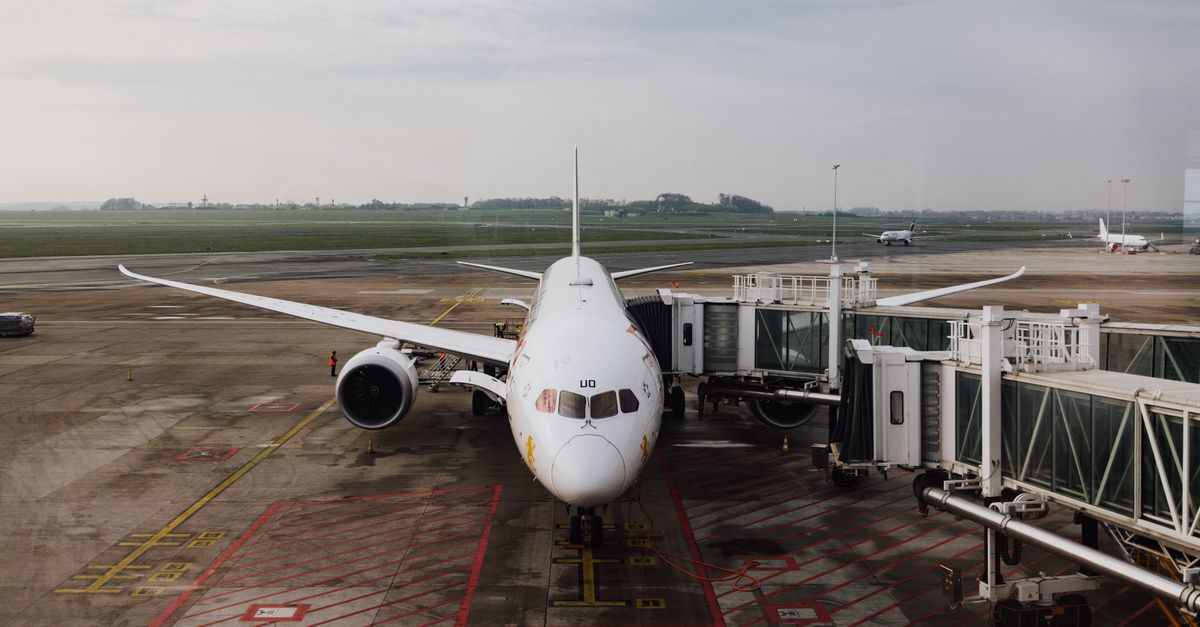
It is illegal to fly a drone within 5km of Bristol Airport without permission, under rules confirmed directly on the airport's own website. Breaking this rule is a criminal offence that can carry a prison sentence of up to five years if it endangers an aircraft. This guide explains what the exclusion zone covers, how to check whether your chosen flying spot falls inside it, and what to do if you need permission or you spot someone flying where they shouldn't.
How big is the no-fly zone around Bristol Airport?
According to Bristol Airport's own published policy, checked in November 2026, it is illegal to fly a drone within 5km of the airport without authorisation. This applies to recreational flyers and commercial operators alike. Airports in the UK generally sit inside a Flight Restriction Zone (FRZ), a defined no-fly area set by the Civil Aviation Authority (CAA) around the runway to prevent any risk of collision with aircraft taking off or landing. The exact shape of an FRZ is not always a simple circle, since it extends further along the runway's approach and departure paths, so 5km from the airport boundary is a reasonable rule of thumb from Bristol Airport itself, but it is not a substitute for checking the real boundary before you fly.
Why the zone exists
Bristol Airport operates drone detection technology and works with Avon and Somerset Police and government agencies to respond to unauthorised drones near its airspace, because even a small drone can force a runway closure or divert aircraft if it strays into the flight path. That risk is why the penalties are severe: endangering the safety of an aircraft carries a prison sentence of up to five years under UK law, separate from any penalty for breaching the exclusion zone itself.
How to check if your flying spot is inside the zone
Do not rely on guesswork or on a straight-line distance measured on a map, since the FRZ boundary is drawn by the CAA and does not always match a simple circle.
- Check NATS' map of airspace restrictions. NATS, the UK's main air traffic control provider, publishes an official map showing FRZs and other airspace restrictions around UK airports and airfields.
- Use a dedicated drone airspace app, such as Drone Assist from NATS, or a third-party FRZ checker like DroneChecker, which lets you search an aerodrome by name to see its restricted zone on a map.
- Remember some restrictions aren't on the map. Temporary or short-notice airspace restrictions don't always appear on standard maps or in a drone's built-in software, so cross-check more than one source if you're flying close to the boundary.
The general UK drone code rules that still apply outside the zone
Even once you're clear of Bristol Airport's exclusion zone, the CAA's standard drone code rules apply everywhere in the UK:
| Rule | Limit |
|---|---|
| Maximum height | 120m (400ft) above the ground |
| Distance from uninvolved people | At least 50m horizontally (smaller sub-250g drones have exceptions) |
| Flying over crowds | Never permitted, regardless of drone size |
| Distance from residential, recreational, commercial or industrial areas | At least 150m (again, smaller sub-250g drones have exceptions) |
All drone pilots in the UK, recreational or commercial, must also register as an operator and the drone's pilot must complete the CAA's online educational test if the rules apply to their aircraft; registration has been compulsory since 30 November 2019.
Can you get permission to fly inside the zone?
Yes, in principle. Flying inside an airport's FRZ is not an absolute ban, it requires permission from the airport itself before you fly. This is typically only granted for specific commercial, survey or emergency-service purposes with safety coordination in place, not for casual recreational flying. If you have a genuine reason to fly within 5km of Bristol Airport, contact the airport directly well in advance of your planned flight rather than assuming a quiet-looking field is safe.
What to do if you see someone flying a drone near the airport
Bristol Airport asks anyone who sees a drone being operated above or around the airport to report it immediately, rather than wait to see if it's authorised. Contact:
- Bristol Airport: 01275 473952
- Avon and Somerset Police: 101
When you report it, try to note where the drone is, whether you can see the pilot, a description of both, the direction it's heading, anything attached to it, and the time you saw it. These details help the airport and police assess the risk quickly.
This is a different question from bringing a drone through security
Flying your own drone near the airport is a different issue from carrying a drone as luggage on a flight. If you're trying to pack a drone, its batteries or its controller for a trip through Bristol Airport's security checkpoint, see our separate guide on bringing a drone through Bristol Airport security, which covers battery rules and hand luggage limits.